

Aluminum is an extraordinary metal: lightweight, versatile, and infinitely recyclable. But to fully exploit its potential, it often requires specific treatment. This is why understanding the purpose of aluminum anodizing is crucial for anyone working with this material or looking to purchase quality products.
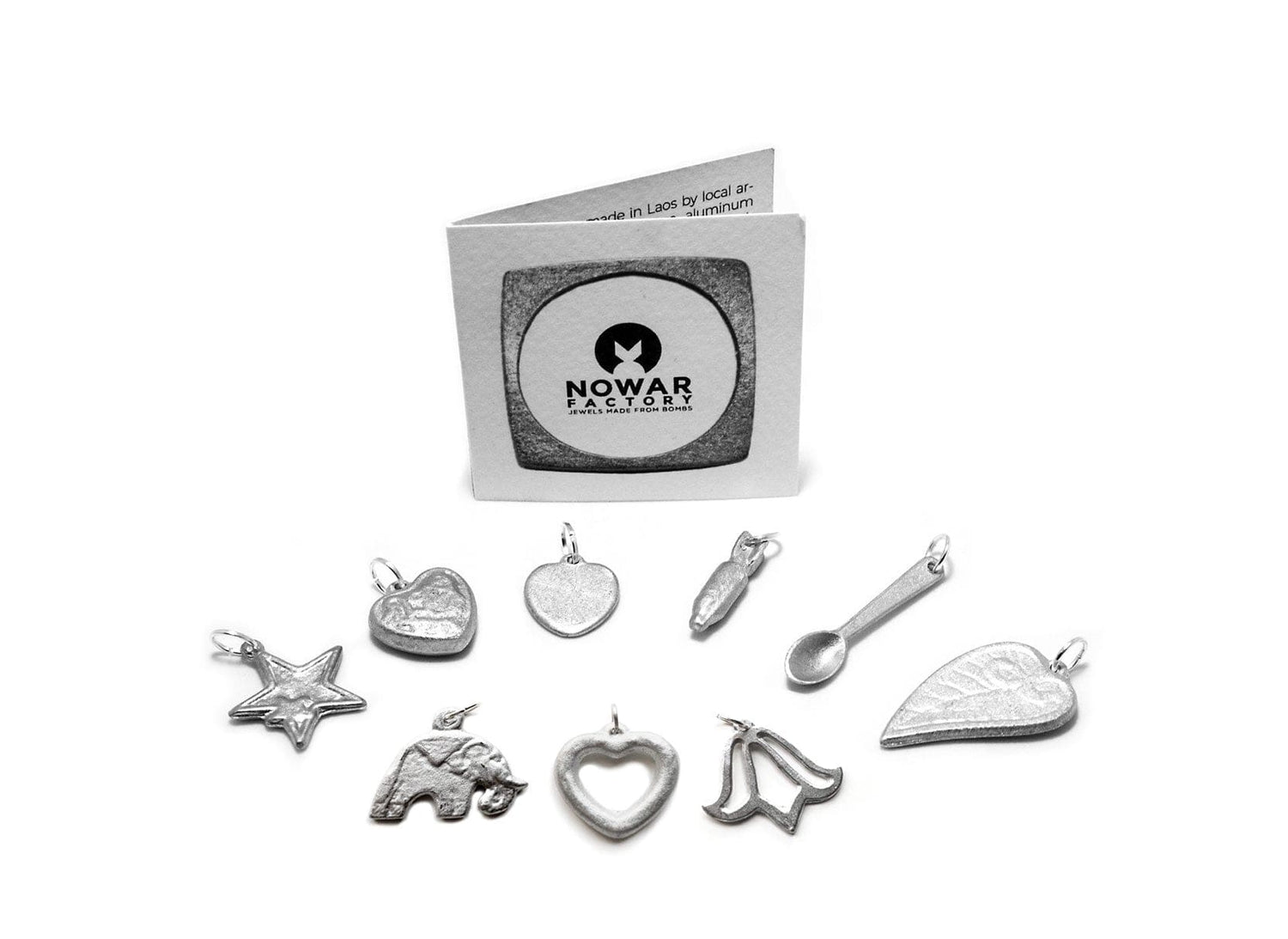
At No War Factory, we know aluminum well: every day, we transform bomb debris and war remnants recovered in Laos into handcrafted jewelry that conveys a message of peace. The manufacturing process for this metal, including its surface finish, determines the durability and aesthetics of the final product .
In this article, you'll discover how anodizing works, why it improves aluminum's strength and appearance, and what concrete advantages it offers compared to other treatments. This information is useful whether you're considering an informed purchase or simply want to better understand the materials around you.
Why is aluminum anodized?
Pure aluminum is naturally subject to surface oxidation . This characteristic, while forming a very thin natural protective layer, is not sufficient to guarantee long-lasting protection , especially in aggressive environments or in applications requiring high mechanical resistance. For this reason, anodizing is used: an electrochemical treatment that strengthens the natural layer, making it up to 2000 times thicker and significantly more effective.
Superior protection against external agents
When you anodize aluminum, you create an artificial barrier that resists corrosion, scratches, and everyday wear . This protective layer becomes an integral part of the metal, not just a surface coating. The result? Objects that maintain their aesthetic and functional properties for decades, even when exposed to rain, sea salt, or harsh environmental conditions.
Anodizing transforms the surface of aluminum into a hard, porous crystalline structure that easily accepts permanent dyes.
Aesthetic appearance and customization
The second reason aluminum is anodized is for aesthetics and color versatility . The process allows for matte, satin, or glossy finishes, as well as a wide range of stable and uniform colors . Unlike traditional paints, the pigments penetrate the pores of the anodic layer and are sealed, ensuring colors that won't fade or flake. This characteristic perfectly explains the use of aluminum anodizing in sectors such as architecture, design, and artisanal jewelry , where durability and beauty must coexist without compromise.
How anodizing works and what changes in microns
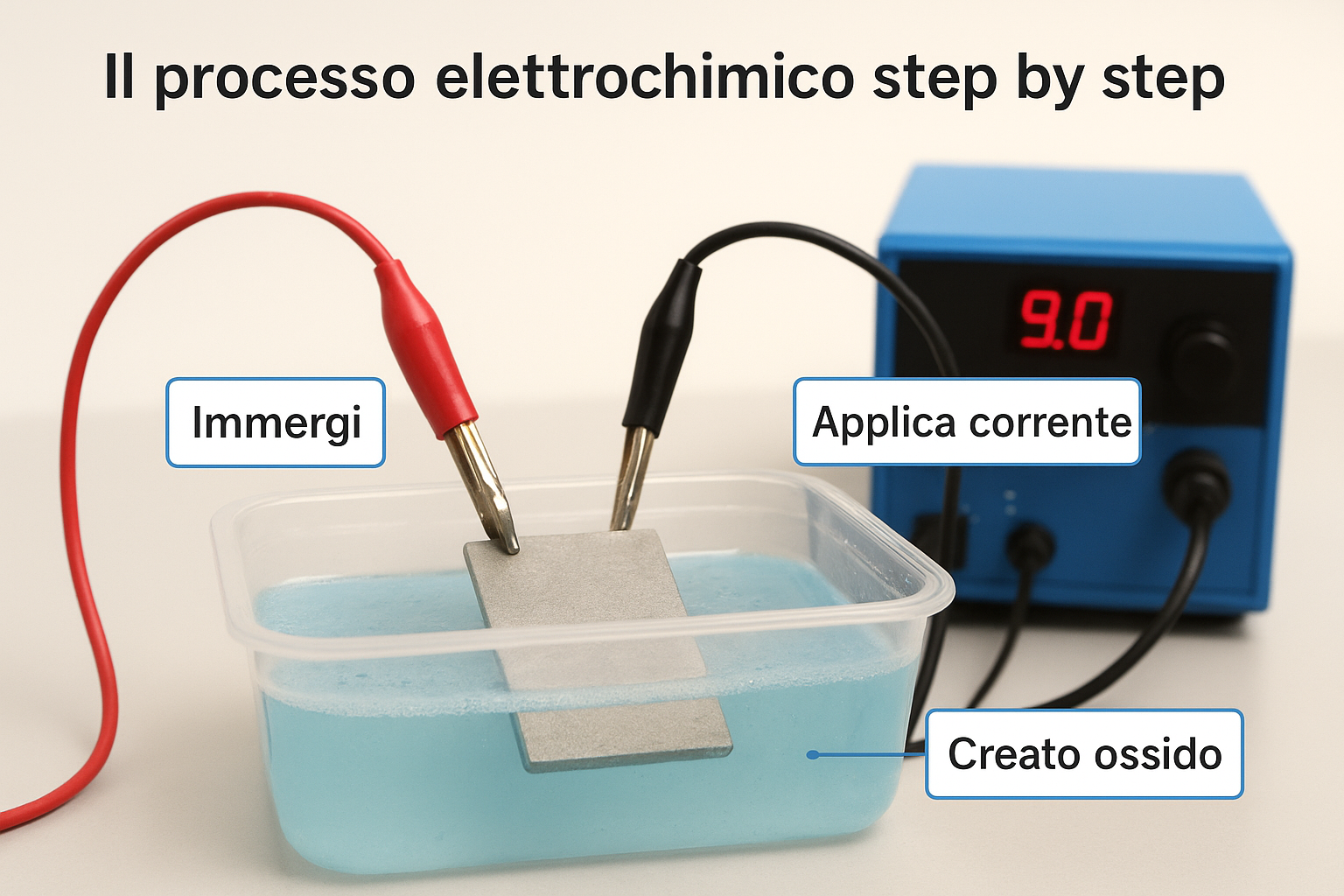
Anodizing transforms aluminum through a controlled electrolytic bath . The workpiece is immersed in an acid solution (usually sulfuric acid) and an electric current is applied: the aluminum becomes the anode and attracts oxygen ions that react with the metal surface. This process creates an artificial oxide layer that chemically integrates with the base metal, growing inward and outward simultaneously.
The electrochemical process step by step
During anodizing, you control voltage, temperature, and time to achieve precise thicknesses measured in microns . The porosity of the layer allows for the subsequent addition of dyes or sealants. Different parameters produce different characteristics: lower temperatures generate harder layers, while longer times increase the final thickness .
The difference between 5 and 25 microns determines whether your item will last for years or decades.
Thickness in microns and practical applications
Decorative applications generally require 5-10 microns , sufficient for interior use and basic protection. For exteriors or mechanical components , 15-25 microns are needed, while hard anodizing reaches 50-100 microns to withstand extreme stress . Understanding the purpose of aluminum anodization also means choosing the right thickness based on the end use of your product.
Types of anodizing: natural, hard, colored
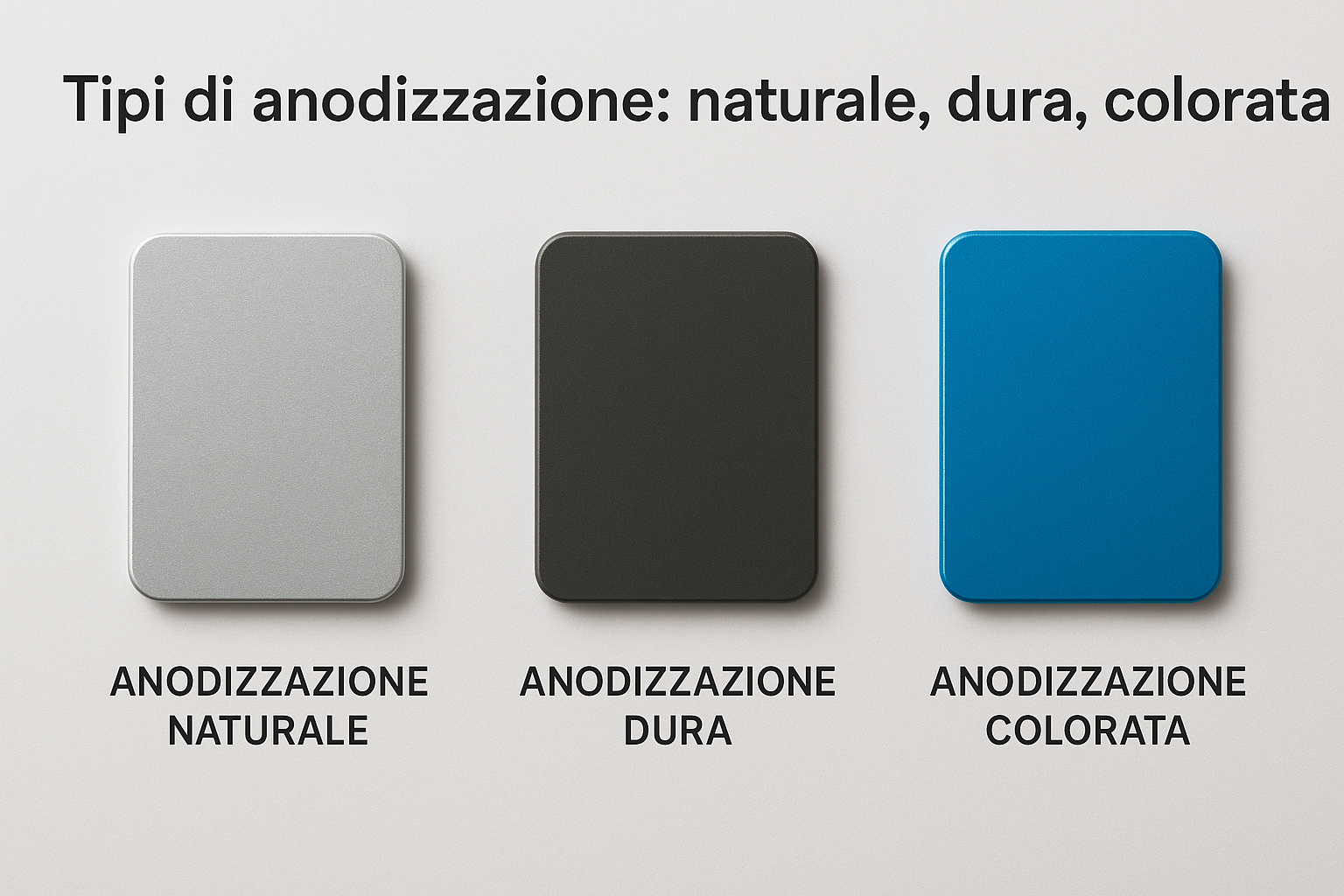
Choose the type of anodizing based on the end use of your object and the characteristics you want to achieve. There are three main categories that differ in thickness, hardness, and aesthetic appearance , each designed to meet specific needs.
Natural and transparent anodization
This variant retains the aluminum's original silver-gray color and creates a 5-15 micron protective layer. Use it when you want to preserve the natural metallic appearance while still ensuring superior corrosion resistance . Ideal for interior components, frames, and applications where aesthetics follow functionality.
Hard anodized for extreme strength
Here, we're talking about thicknesses between 50 and 100 microns achieved at low temperatures and high tensions. The result? Surfaces that resist intense mechanical wear and aggressive environmental conditions. You'll find this treatment on aerospace components, mechanical parts subject to friction, and professional tools.
Hard anodizing can achieve surface hardnesses comparable to that of hardened steel.
Colored and decorative anodizing
Adding organic or inorganic pigments during the process achieves stable colors that don't fade. This perfectly explains the purpose of aluminum anodizing in design: you create custom finishes while maintaining all the protective properties of the anodic layer .
Advantages, limitations and alternatives to anodizing
Anodizing offers tangible benefits , but it also presents technical constraints that you must evaluate before choosing it. Understanding when anodizing is beneficial and when more suitable alternatives exist allows you to make informed decisions for your projects.
Main advantages of the process
Get long-lasting protection without adding significant weight: the anodic layer grows, integrating with the base metal. This treatment guarantees superior chemical resistance compared to traditional paints and allows for aesthetic customizations that last over time.
Anodizing maintains the thermal conductivity and mechanical characteristics of the original aluminum unchanged.
Technical limitations and practical considerations
The process requires specialized equipment and precise control of electrochemical parameters. Different alloys produce variable color results , making it difficult to achieve uniform hues on pieces of different compositions. Furthermore, repairing scratches on anodized surfaces is complex.
Valid alternatives for specific needs
Powder coating offers lower costs for small production runs, while chemical passivation protects without altering the appearance. Understanding the purpose of aluminum anodizing also means recognizing when other treatments better meet your specific needs.
Common questions: rust, safety, maintenance
When considering anodized products, you naturally wonder whether they will truly last over time and whether they pose any health risks. We answer the most frequently asked questions with verified information to help you make an informed purchase decision.
Does anodized aluminum rust?
No, anodized aluminum doesn't rust because aluminum doesn't contain iron . Rust is the oxidation of iron, while anodizing creates a stable aluminum oxide layer that prevents any chemical deterioration. You may notice white spots in particularly aggressive environments, but this is easily removable surface corrosion , not actual rust.
The anodic layer protects the base metal even when exposed to sea salt or constant humidity.
Is it safe for skin contact?
Absolutely. Anodized aluminum oxide is inert and biocompatible , which is why you'll find this treatment on jewelry, kitchenware, and medical devices. The sealed surface doesn't release metal particles and doesn't cause skin allergies.
How do you maintain your appearance over time?
Clean regularly with warm water and neutral soap , avoiding abrasive cleaners that scratch the surface. To understand the practical benefits of aluminum anodizing , remember that this treatment requires minimal maintenance compared to other materials.
In short
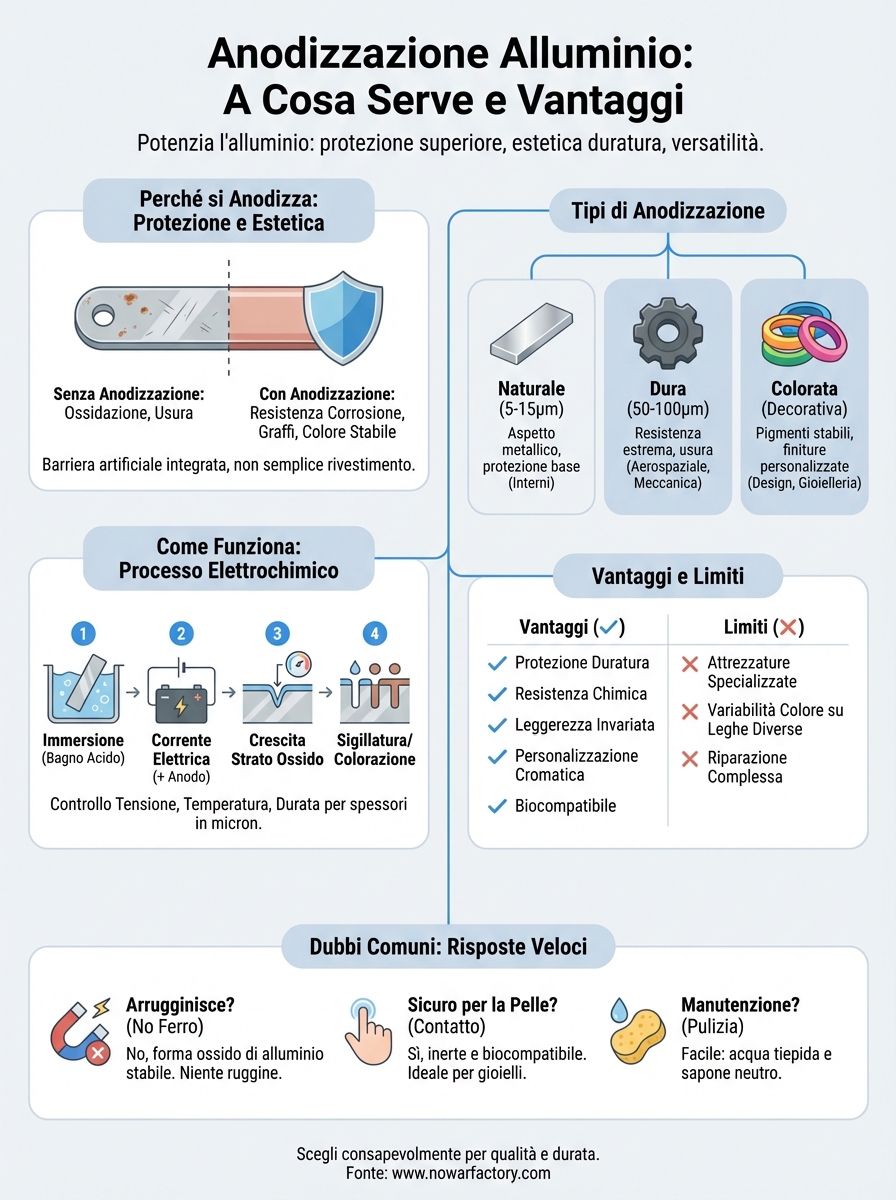
Now you know exactly what aluminum anodizing does : protect the metal from corrosion and wear, customize its appearance with long-lasting colors, and increase its mechanical strength without adding significant weight. This electrochemical treatment creates an artificial oxide layer that becomes an integral part of the aluminum, ensuring superior performance compared to traditional paints or coatings.
Understanding thicknesses, types, and applications allows you to better evaluate the quality of the products you purchase. Anodized aluminum is durable, requires minimal maintenance, and is suitable for extreme decorative or technical applications.
At No War Factory, we transform aluminum recovered from war scrap into handcrafted jewelry that tells stories of peace . Each piece embodies the value of sustainability and transformation, combining aesthetic beauty with profound meaning. Discover how extraordinary materials become tangible symbols of rebirth.